
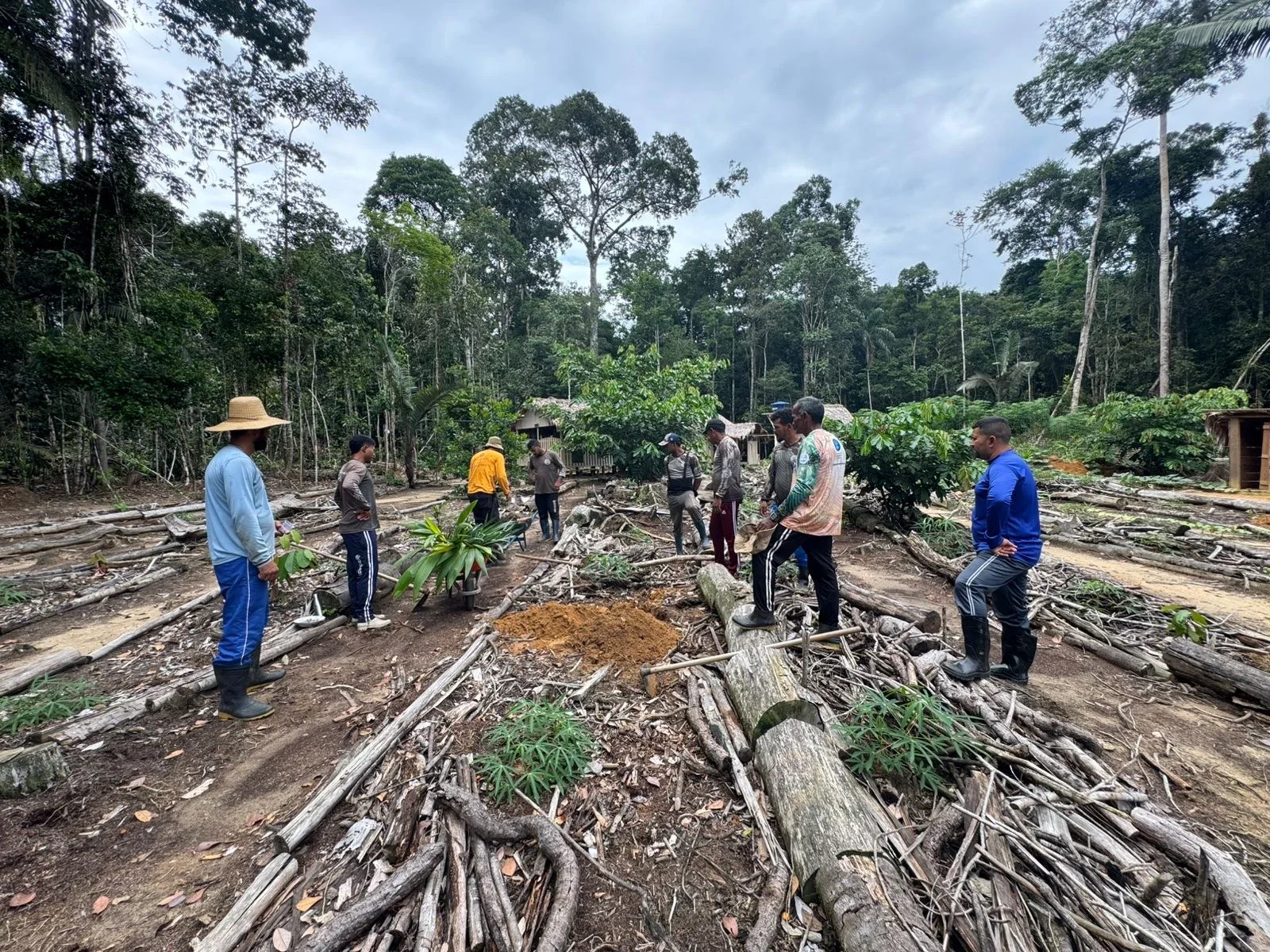
Farming that earns more than clearing forest
Replacing slash-and-burn family farming with syntropic agroforestry in Guajará, Amazonas.
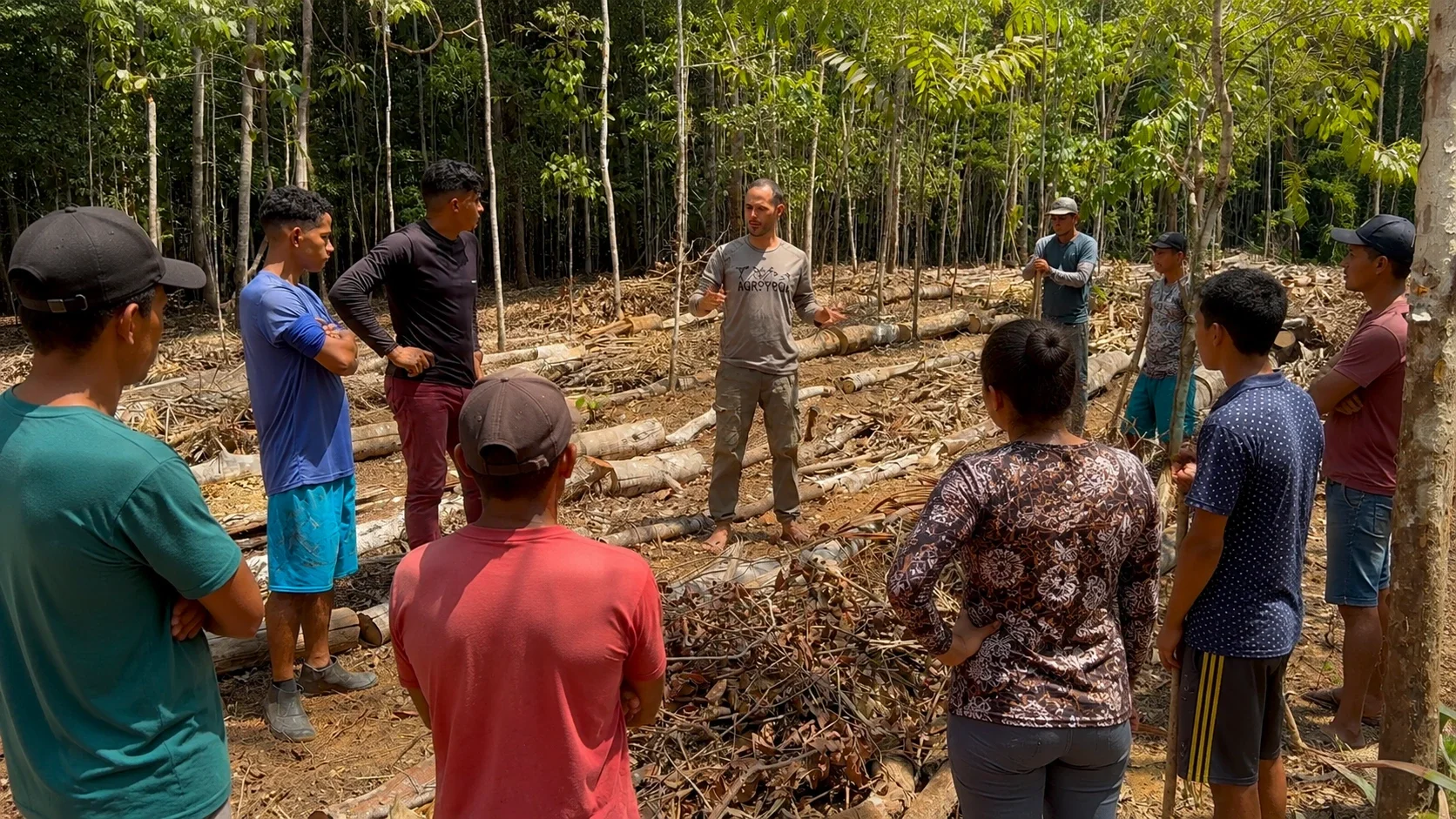
Deforestation in Guajará is driven by farming families who have no viable alternative.
83% of farms in Guajará grow cassava as their primary crop. Plots exhaust in two to three years. When they do, families clear new forest.
The average household earns around R$750 a month — 50% less than the Brazilian minimum wage. 30% of producers never attended school.
Cassava is the clearest case of a wider issue: exhausted land, low income, few alternatives.
Families farm this way because it is the only economic model available to them.
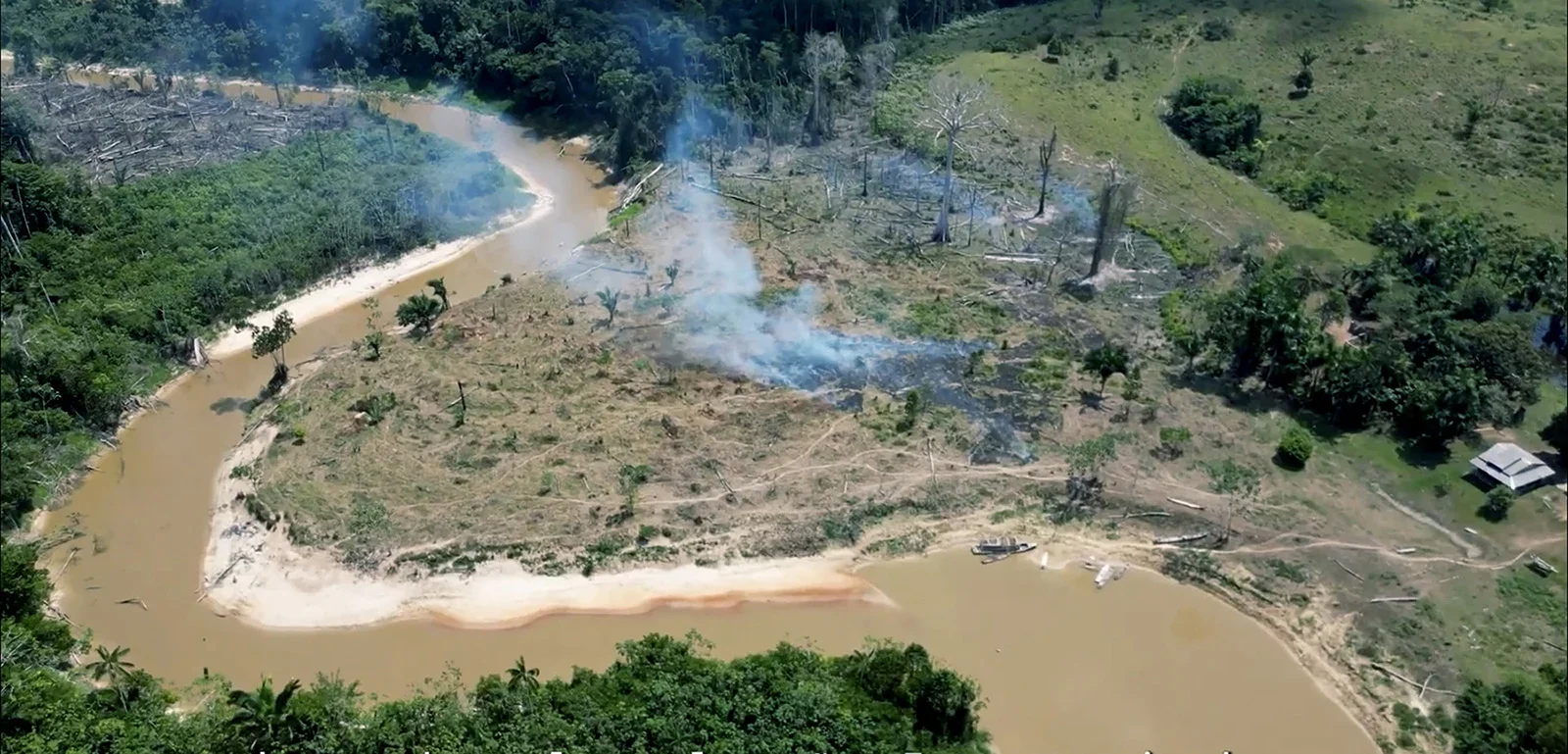
A Different Model
Syntropic agroforestry replaces the cycle of clearing.
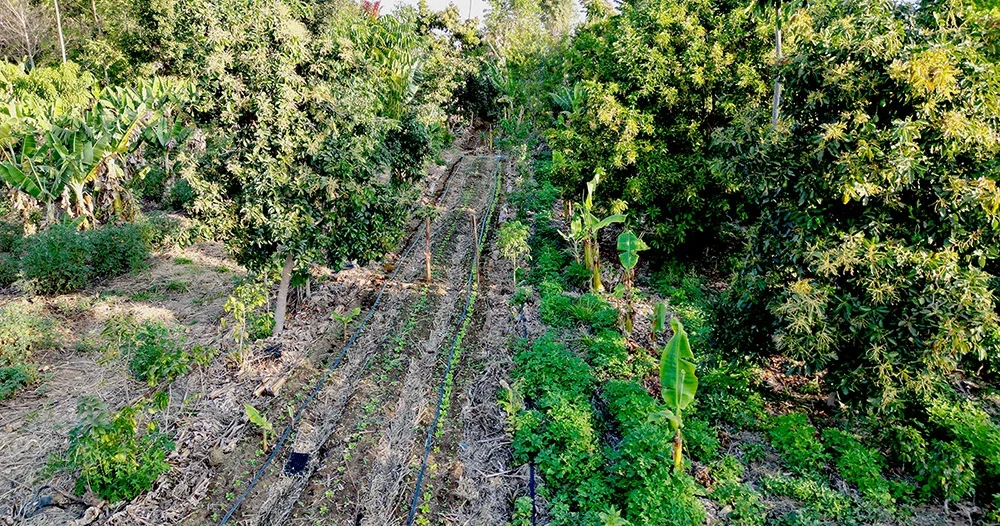
Trees are planted alongside the final cassava crop. After harvest, fast-growing crops — beans, banana, pineapple — produce income within 12 to 18 months.
Higher-value species like cacao, açaí and cupuaçu follow in three to five years.
The same land keeps producing. The farmer never needs to clear new forest.
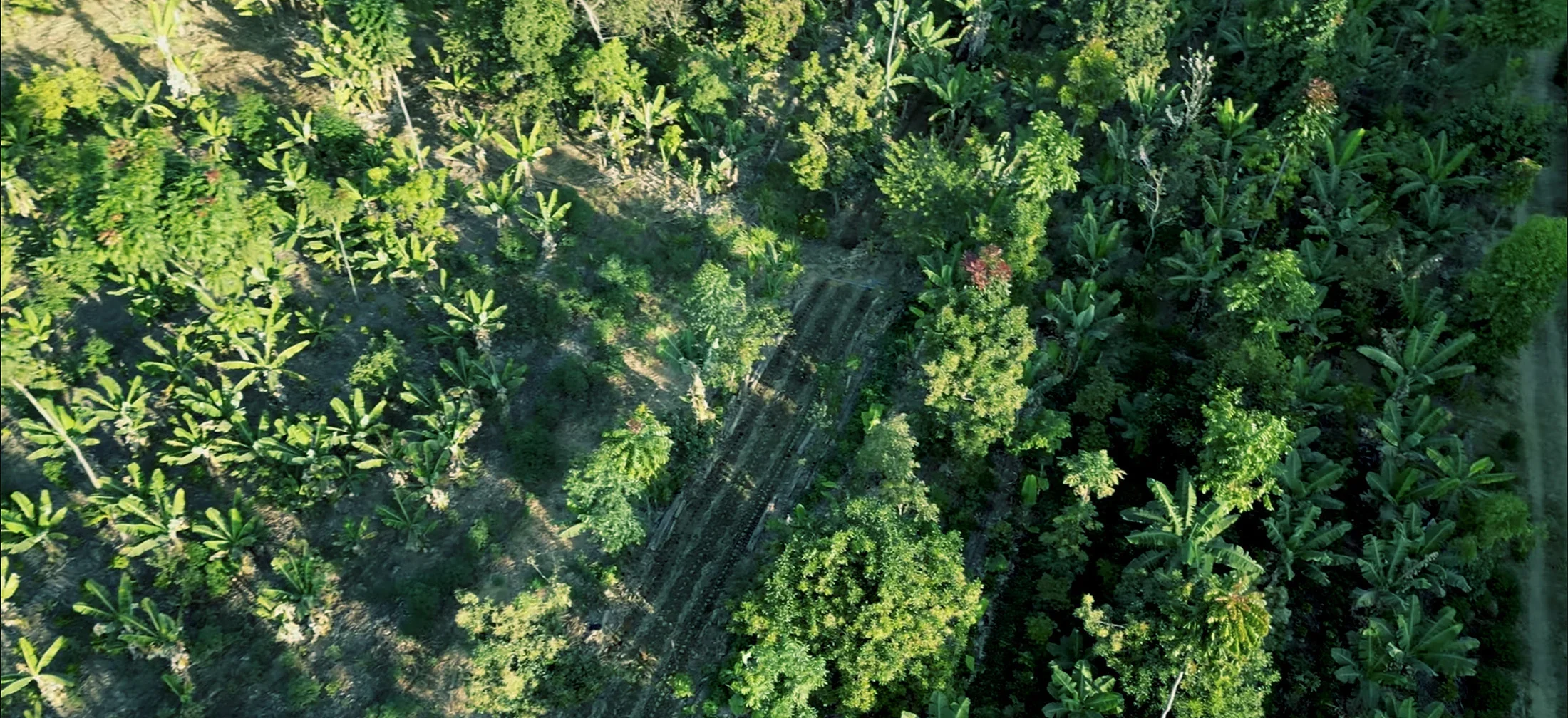
How We Support the Transition
Our approach is built on five core principles.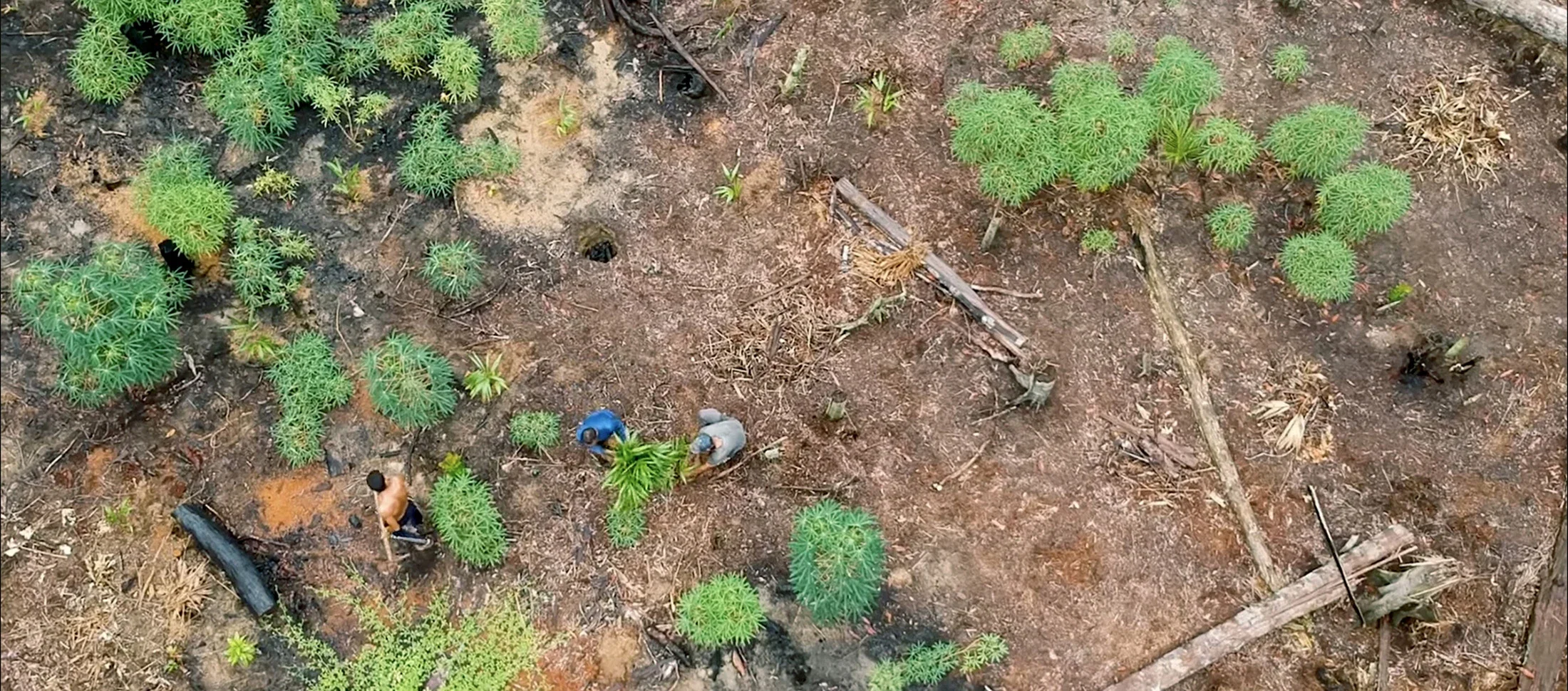
Land stays with farmers.
We do not buy or lease land. The farmer remains the owner of everything that grows.
Ideas come from farmers.
We present options. Farmers decide what works for their land, their family, their future.
No farmer loans.
IEUNI covers the full initial investment — seeds, materials, setup — so farmers take no financial risk on entry.
What farmers earn is theirs.
IEUNI takes no percentage, no cut, no fee from farmer crop income.
Participation is voluntary.
Genuine interest and written commitment come before any planting.
We provide ongoing support.
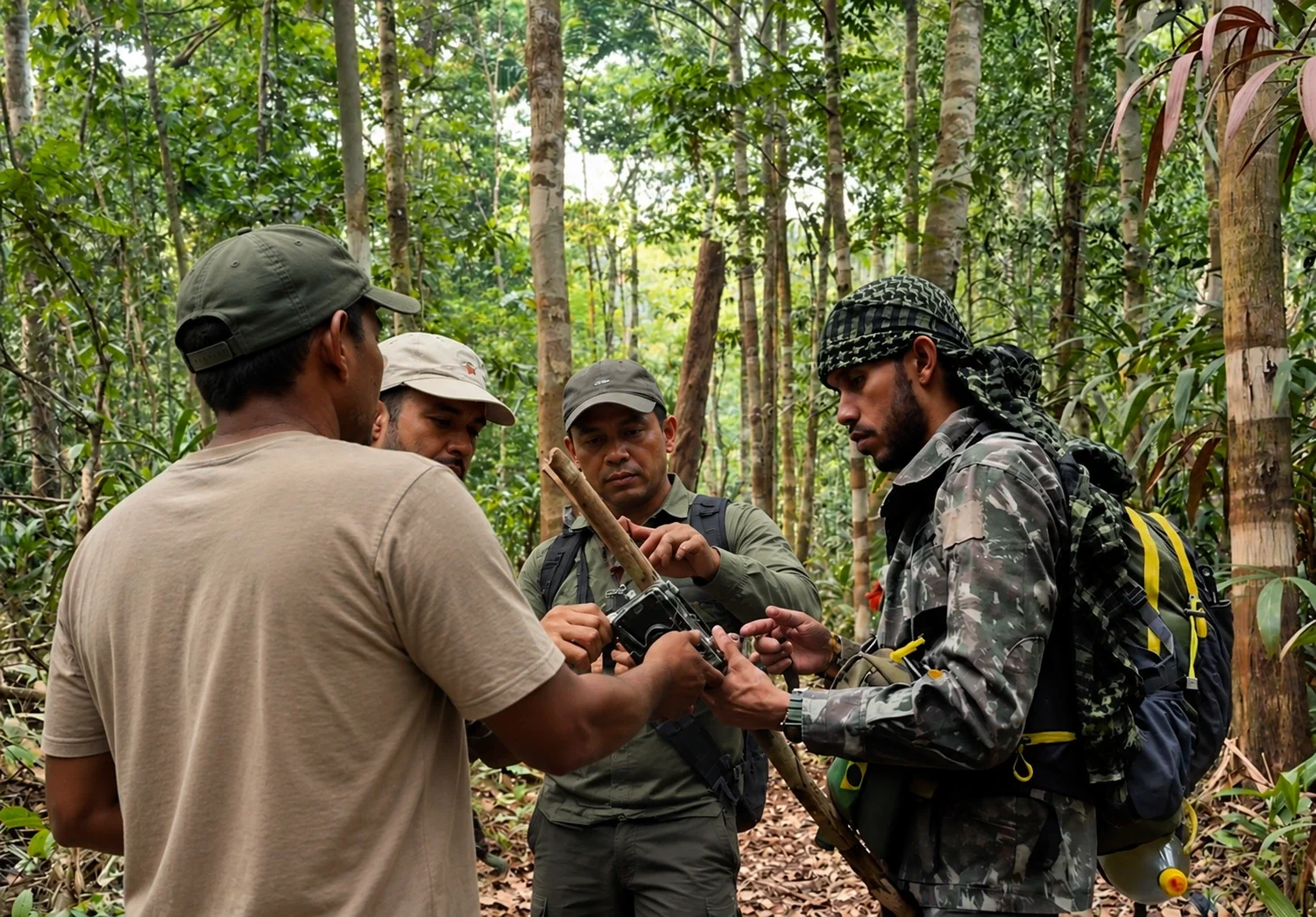
Technical training, business education on crop selection and market timing, and regular monitoring as the system develops. We advise on sales channels and pricing so farmers capture margins cassava never offered — the transition is supported, not left to the farmer alone.
The 2026 Pilot
We are working with 8 to 15 families to test the technical, economic and social assumptions of the model before any scaling decision.
Each family begins with a small pilot plot — a manageable area to learn on before scaling the system across more of their land in later years.
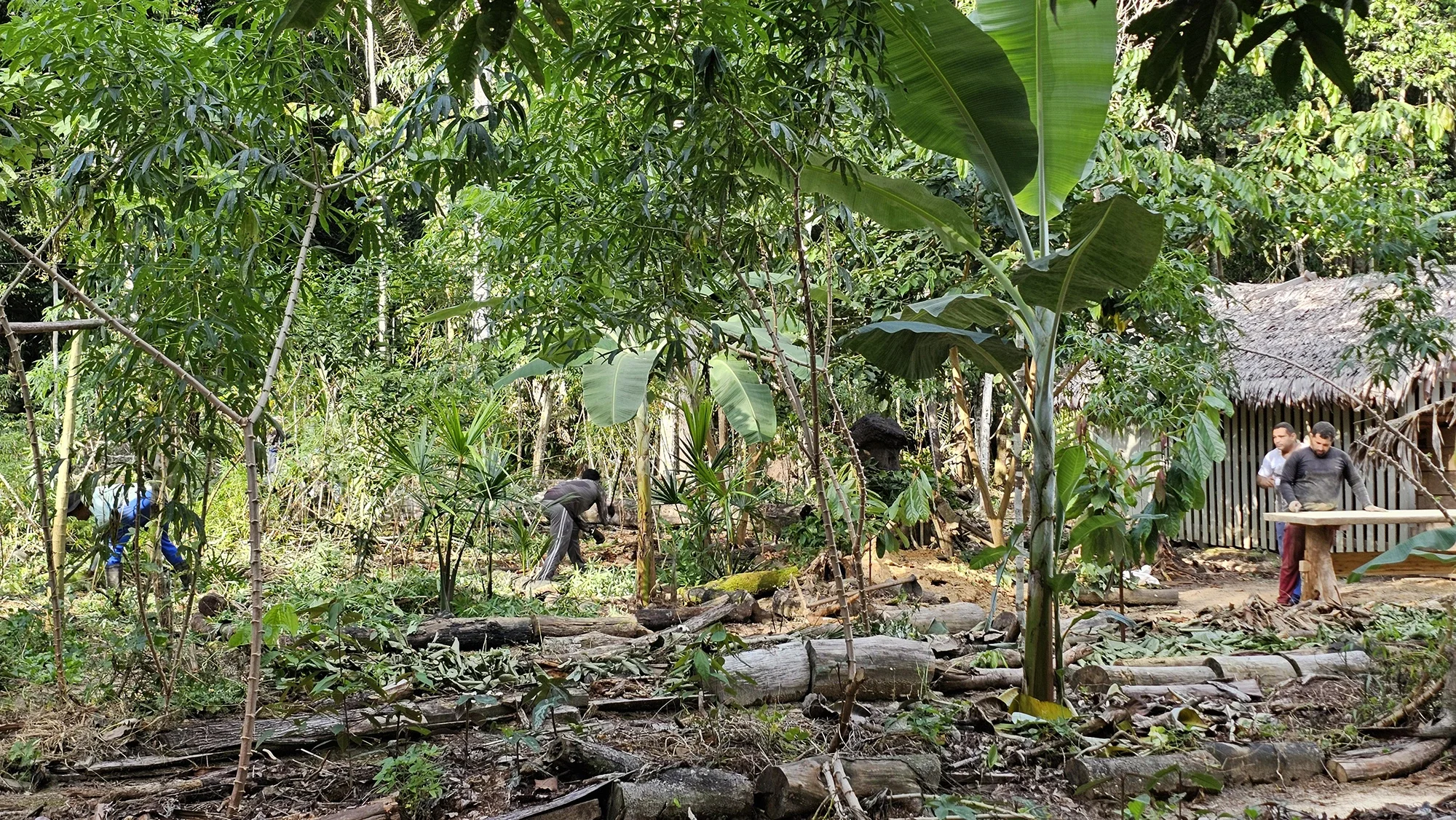
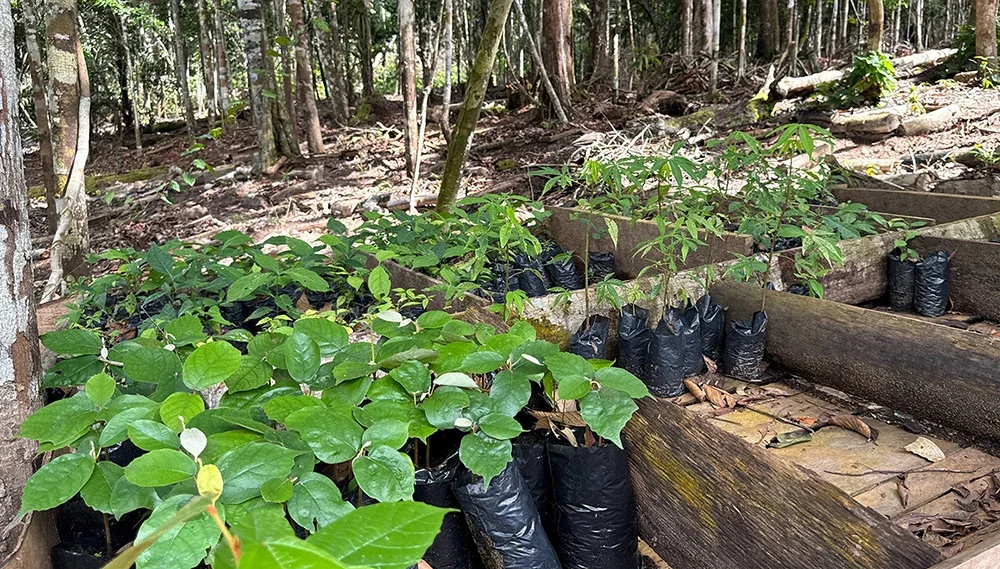
Preparation and farmer selection run through the first half of the year.
Planting happens during the December 2026 to January 2027 window.
Management and monitoring continue from 2027 onward.
Our Partners
Forests4Farming
Forests4Farming is a non-profit specialising in syntropic agroforestry. They are IEUNI's technical partner on the 2026 pilot, contributing expertise on farmer selection, planting diagram design, installation workshops, management training, and per-farm economic analysis. IEUNI leads implementation on the ground in Guajará — farmer relationships, logistics, and day-to-day operations — drawing on this technical expertise.
Gama Farmers' Association
Gama Farmers' Association is an established agricultural organisation in Guajará. They are IEUNI's local partner in the region — supporting farmer acquisition and extending the programme into the regional agricultural networks that farmer-led change depends on.
Where This Is Going
The 2026 pilot is the start of something larger. Our working ambition over the next five years includes:Scale.
Around 500 hectares of active syntropic agroforestry across Guajará, and 3,000 hectares of assisted natural regeneration on farmers' unused land.
Regeneration alongside agroforestry.
A second pilot in assisted natural regeneration — farmers keeping forest standing and degraded land recovering on the same properties where their agroforestry plots earn income.
Farmer-to-farmer training.
Established farmers trained and incentivised to bring in new families — the fastest and most trusted route to scale in a region where IEUNI's ground team will always be smaller than the opportunity.
Higher-value products.
Over time, IEUNI will help build local processing — fruit dehydration and similar — so higher-value products like cacao, coffee, honey and oils add value in the region rather than downstream, building farmer income.
Environmental services.
Carbon and payments for environmental services will become complementary mechanisms that help sustain the programme and scale IEUNI's operations.
A revolving fund.
Initially seeded by grants, eventually sustained by IEUNI's share of environmental-service returns — letting the programme grow without depending on each new grant round.
The forest this protects.
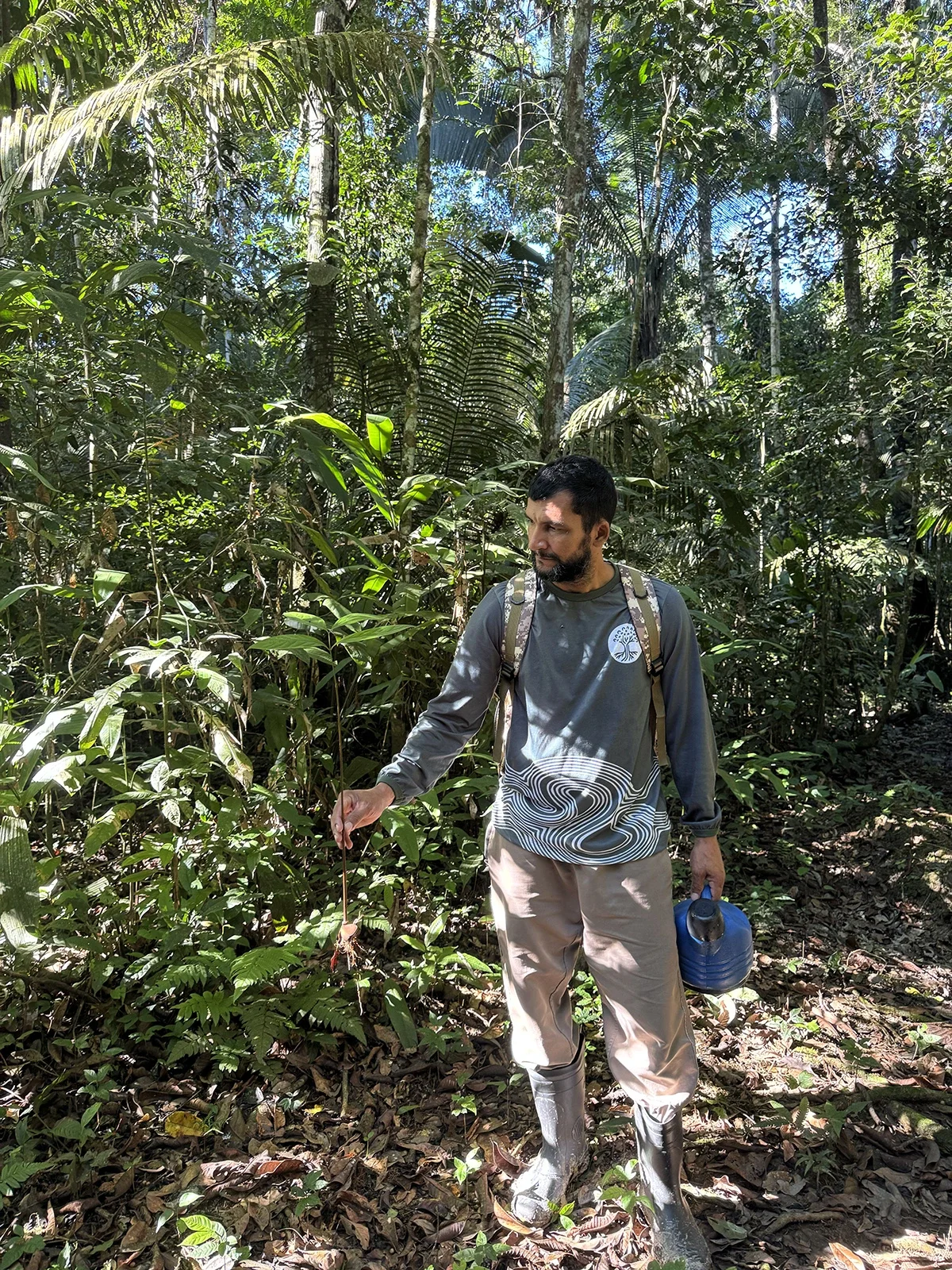
Agroforestry eases the economic pressure to clear forest, so the rainforest around the farmers keeps standing. At its centre is our conservation reserve, a living reference and a buffer against deforestation spreading further north.
Work
with us
We're looking for partners — philanthropic, institutional, and technical — to scale this work.
If you're interested in supporting the 2026 pilot or beyond, let's talk.